

What is a Dental Implant?
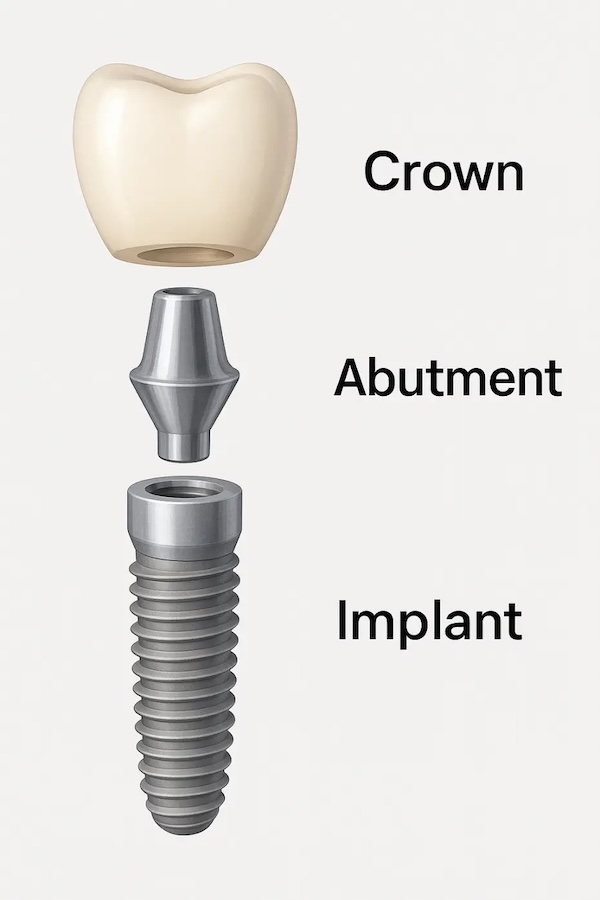
A dental implant is a special pin (made of Grade 4 medical titanium, zirconium, titanium alloys with other materials) screwed into the jawbone, replacing the root of the tooth.
An abutment (an intermediate link) is attached to it, which is necessary for fixing a crown to the dental implant (replacing the visible part of the lost tooth).
For the period of osseointegration of the dental implant (3 to 6 months, which is how long it takes for the artificial root to fuse with the bone), a temporary crown is placed on it. After the implant has taken root, it is replaced by a permanent ceramic E-max or zirconia crown.
Teeth are essential features on our face, and a missing tooth or several teeth can make you conscious of yourself while doing things like eating, smiling, or talking. It might also lead to various oral health problems. But with the help of dental implants, you will not have to think about hiding your smile and can get your beautiful smile back.
What Are the Different Types of Full Implants?
Unlike traditional dentures, dental implants are designed to be permanently placed in your mouth. Most people prefer permanent implants over removable dentures because they are the closest to having your natural teeth. An important benefit of having implants placed is the prevention of bone loss that naturally occurs after tooth loss. Having implants placed in your bone maintains your current bone level. Full mouth dental implants also provide an alternative to a removable option that can greatly affect your active lifestyle.
The most commonly used dental implant procedures for replacing all the missing teeth in the mouth include:
Fixed bridge dental implants
As the name suggests, this type of implant cannot be removed by the patient. Unlike regular dentures, which have pink acrylic and plastic teeth, fixed bridge dental implants are made from zirconia or porcelain fused to metal (PFM). Depending on the jawbone's thickness, the dentist will place anywhere between six to eight implants in each arch to hold the artificial teeth in place.
All-on-4 dental implants
This type of full denture implant uses four dental implants in each arch to hold all the artificial teeth in place. Unlike the fixed dental bridge, which uses standard vertical dental implants, the All-on-4 implants use tilted dental implants on the front teeth.
All-on-6 dental implants
This type of implant is similar to the All-on-4 implants. The main difference between the two is that the dentist uses six implants on each arch to hold the artificial teeth in place.
Before Dental Implants
Dental implants are the best and closest way you can get to your natural and healthy teeth. Dental implants can be defined as the artificial roots that look much like the shape of screws. Several conditions need to be checked before the doctors go ahead with performing the dental implants on patients.
- The patient should not suffer from any disease that affects the bones or the gum's healing process. They should also be free from diseases like osteoporosis, which might affect the bone condition in general.
- The patient needs to have at least the appropriate amount of jawbone. Bone level starts decreasing once we lose a tooth. If there is not enough bone, the dentist may recommend bone grafting before the implant itself (in most cases).
- The dentist you are consulting must be very experienced and professional.
Request an appointment
Whether you need a second opinion, are looking to improve your smile, or are trying to get rid of some pesky discomfort, we're here for you. We offer personalized treatment plans tailored to your needs. Interested in booking an appointment?
Kindly give us 24 hours to get back to you!
Once your appointment request is approved, we'll provide you with more details to make your first visit as smooth as possible.